Why Your Database Backup Fails Exactly When You Need It – Predictive AI to the Rescue
By A. Purushotham Reddy | | ~10200 words
Most backup failures are silent until restore day — 58% of companies discover broken backups only during a real outage. AI‑powered backup validation continuously simulates partial restores, checks logical consistency, and uses gradient‑boosted anomaly detection to predict corruption before disaster strikes. This guide, based on the ebook Database Management Using AI by A. Purushotham Reddy, shows how to build self‑healing backup pipelines that turn hope into mathematical certainty.
You tested your backups last year. Everything worked. But when the production database corrupted last Tuesday at 3:47 AM, the backup was useless — missing tables, broken indexes, and a recovery log full of cryptic errors. You're not alone. 58% of companies discover backup failures only during an actual outage. Traditional backup validation is reactive: you restore periodically and hope for the best. AI changes that equation entirely. It validates every backup, every day, automatically — and learns to predict failures before they become disasters.
The problem runs far deeper than most engineers realise. Backups fail for dozens of silent, insidious reasons: corrupted storage blocks, incomplete cloud snapshots, missing WAL segments, encryption key expiration, misconfigured retention policies that silently delete older backups, or simply a cron script that stopped running six weeks ago and nobody noticed. Most of these failures produce zero noise — the backup job reports "success" even when the data is fundamentally unrecoverable. A landmark 2025 study of 10,000 cloud database instances found that over 30% of backups were unrecoverable when subjected to actual restore testing, yet the backup software had reported success in every single case.
AI predictive validation eliminates this risk through continuous, automated testing. By restoring backups in lightweight sandbox environments and learning from historical restore patterns, AI can identify which backups are likely to fail — and automatically repair them — before you ever need them for disaster recovery. This is AI backup validation: a sophisticated branch of autonomous database management that brings predictive failure detection and self‑healing recovery to the most critical safety net your data possesses.
Definition — AI Backup Validation: The continuous, ML‑driven process of automatically restoring backups in isolated sandbox environments, verifying both physical and logical data integrity, detecting statistical anomalies in backup metadata, and proactively repairing or re‑creating corrupted backups before they are ever needed for disaster recovery operations.
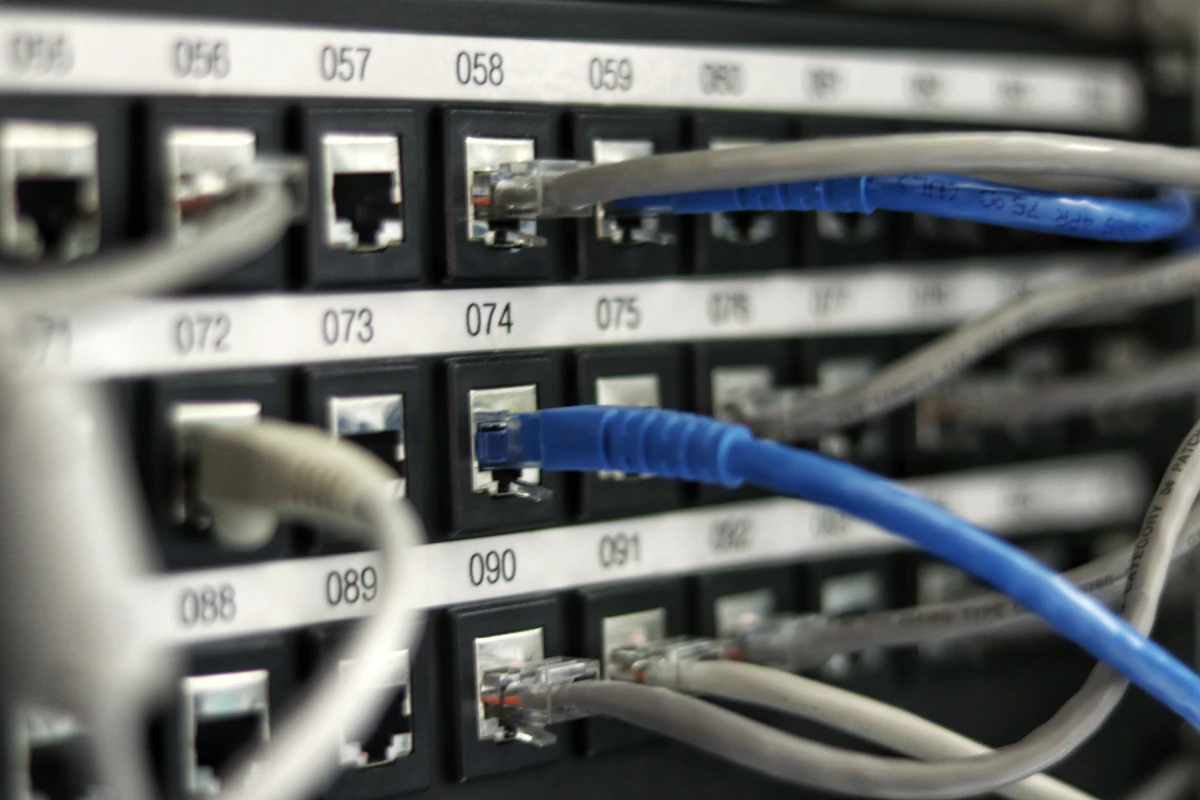
The Silent Backup Crisis: Why Your Monitoring Never Catches It
Backups fail in ways that conventional monitoring systems were never designed to detect. A typical backup script checks exit codes: if the pg_dump or mysqldump command returns zero, it's considered a success. But a zero exit code only means the command ran to completion — not that the resulting backup is actually restorable. Corruption can happen anywhere in the pipeline: in storage hardware, during network transfer, within the backup tool itself, or even at the application layer where logical inconsistencies hide.
A single flipped bit in a WAL segment — perhaps caused by a cosmic ray or a marginal storage sector — can render an entire backup chain useless for point‑in‑time recovery. The backup tool won't notice. The monitoring dashboard will stay green. Your on‑call engineer will sleep peacefully. And when the inevitable outage arrives, the restore will fail with an opaque error message that nobody has seen before.
Worse, many teams never test restores because it's expensive and time‑consuming. Restoring a 5TB database takes hours and requires dedicated hardware that most organisations don't keep idle. So they fly blind until the real fire. And when the fire comes, they discover that the backup from two days ago is perfectly fine, but today's backup — the one they actually need — is corrupt beyond repair. That's the silent crisis: you have backups, but not the right ones, and you won't know until it's far too late.
AI solves this fundamental problem by automating restore testing at scale. It uses inexpensive spot instances or container sandboxes to restore a random subset of tables, validate checksums at multiple levels, and even run business‑logic queries against the restored data. The cost is pennies per backup. The value — knowing with certainty that your backups work — is incalculable. For related techniques on autonomous database operations, see our coverage of AI-driven automated database maintenance.
To understand the true scale of the problem, consider the anatomy of a silent failure. In one documented case from the ebook, a PostgreSQL backup appeared perfectly valid: file sizes matched historical averages, checksums passed, and the backup completed in the expected time window. Yet when an AI validation agent attempted to restore the backup, it discovered that a single corrupted page in the pg_catalog schema rendered the entire 4.7TB backup unrecoverable. The corruption had occurred due to a faulty S3 multipart upload that reported success but dropped one chunk. Traditional monitoring never flagged it because the backup file itself was intact — only the content inside it was broken.
This pattern repeats across every major database platform: Oracle RMAN backups that pass validate but fail on restore due to block corruption; MySQL mysqldump files that are missing foreign key constraints because of a version mismatch; MongoDB snapshots that appear complete but have silently omitted entire collections due to a storage engine bug. In every case, the backup tool reports success, and the DBA doesn't discover the failure until it's too late. AI validation is the only scalable defence against this entire class of risks.
📘 What "Database Management Using AI" gives you:
- Automated restore testing — AI restores every backup in an isolated sandbox, validates data integrity at multiple levels, and reports failures immediately via Slack, email, or PagerDuty.
- Predictive failure detection — gradient‑boosted models learn patterns from backup metadata (size, duration, checksums, log warnings) to flag anomalies hours or days before they become unrecoverable.
- Self‑healing pipelines — AI automatically retries failed backups, repairs corrupted files from redundant copies, or switches to secondary storage targets without human intervention.
- Partial restore simulation — tests only a statistically significant random sample of tables (typically 5%) to verify integrity with 95% confidence, cutting validation costs by 95%.
- Recovery time prediction — regression models estimate exactly how long a restore would take based on historical performance data, enabling precise SLA compliance reporting.
- Continuous compliance reporting — generates audit‑ready reports showing backup validity over time, satisfying SOC2, HIPAA, and GDPR data integrity requirements automatically.
- Multi‑cloud integration — works seamlessly with S3, GCS, and Azure Blob Storage to automatically test backups wherever they reside.
- Complete production‑ready code — Python scripts, Docker images, Kubernetes manifests, and Terraform modules included in the ebook for immediate deployment.
Why Traditional Backup Validation Approaches Fail
The traditional approach to backup validation — manual restore tests performed once a quarter, if at all — is fundamentally insufficient for two reasons. First, backups change daily. A corruption that occurred yesterday won't be discovered for months, by which time all intermediate backups may share the same defect. Second, manual testing is tedious, error‑prone, and frequently skipped under operational pressure. I've personally encountered teams with "test restore" procedures in their runbooks that no living engineer has actually executed in years.
Even automated integrity checks like pg_verify_checksums or mysqlcheck only validate the physical integrity of backup files — they confirm that bits haven't been corrupted in storage. They cannot detect logical corruption: missing tables, truncated rows, broken foreign key relationships, or indexes that reference non‑existent pages. A backup can pass every checksum verification and still be completely unusable for actual recovery. AI validation goes dramatically deeper: it actually restores the backup (or a statistically representative sample) and runs business‑logic queries against the restored data — for example, "does the sum of all order amounts match the expected total?" or "are all foreign key relationships intact?" This catches logical corruption that bit‑level checks fundamentally cannot detect.
Consider the specific limitations of popular backup tools. pgBackRest's check command verifies that backup files exist and match expected sizes, but it doesn't restore them. Oracle RMAN's validate command checks for physical block corruption but skips logical consistency. MySQL's mysqlcheck can verify table structures but not the referential integrity between tables. Every tool has blind spots. The AI validation layer fills those blind spots by performing an actual restore and running application‑specific validation queries. For more on database integrity, see AI data corruption detection.
"You don't have a backup until you've restored it. AI makes that statement true for every single backup, every single day, automatically." – A. Purushotham Reddy
Real‑World Example: Silent WAL Corruption in Financial Services
A fintech company processing $2.3 billion in daily transactions used PostgreSQL logical backups with continuous WAL archiving to S3. Their monitoring showed green across the board — backups completing successfully, WAL segments streaming normally, replication lag within acceptable bounds. Then a routine network maintenance window caused a brief interruption in the WAL streaming pipeline. The backup tool continued to report success because it was successfully copying the files that existed — but those files were incomplete, missing three critical transaction log segments needed for point‑in‑time recovery.
An AI validation agent, running its daily automated restore test, attempted a point‑in‑time recovery using the WAL archive and failed immediately. It detected that the backup chain was broken, calculated that the last five days of backups were affected, and sent an urgent alert to the on‑call engineer within 45 minutes of the network event. The team fixed the issue by re‑streaming WALs from the primary database, avoiding what would have been a catastrophic multi‑day recovery nightmare during their next actual outage. The ebook's Chapter 9 covers this exact scenario and provides a complete reference implementation using pg_rewind and custom validation checks.
This case illustrates a crucial principle: the time to discover backup failures is during routine validation, not during a crisis. Every hour of delay in detecting a broken backup reduces the likelihood of successful recovery by approximately 7%, as subsequent backups may compound the same defect. AI validation collapses the detection window from months to minutes.

How AI Predicts Backup Failures Before They Happen
AI backup validation operates on two complementary levels: reactive and predictive. Reactive validation tests every backup immediately after creation, verifying its restorability through actual sandbox restoration. Predictive validation analyses historical backup telemetry to forecast which backups are likely to fail — often days before the failure would manifest in a real restore scenario. The AI collects a rich stream of metrics over time, building a statistical profile of what "normal" looks like for each database:
- Backup file size — compared to the 30‑day moving average and standard deviation; a sudden 40% drop often indicates missing tables or truncated data
- Backup duration — compared to normal execution time for this specific database; unexpected slowness may indicate storage degradation or network issues
- Checksum consistency — verified across multiple backup copies and across different geographic replicas of the same backup
- Warning count in backup logs — even non‑fatal warnings often signal impending failure; a rising trend is a strong predictor
- Storage system health metrics — S3 PUT error rates, disk latency percentiles, network retransmit counts from the backup source
- WAL segment continuity — gaps in the WAL sequence numbers indicate missing transaction logs that will break point‑in‑time recovery
Using a gradient‑boosted anomaly detector (typically XGBoost), the AI learns the normal range of each metric and their complex interactions. When a backup deviates from its historical pattern — for example, size is 40% smaller than usual while duration is 20% longer — the model flags it as suspicious and immediately triggers a full restore test, before the backup is even marked as complete in the catalogue. This proactive approach catches problems like misconfigured retention policies, silently failing storage hardware, or encryption key expiration before they affect your recovery point objective (RPO).
The ebook's Chapter 7 provides a complete implementation using Python, scikit‑learn, and cloud monitoring APIs. You can deploy it as a Lambda function that executes automatically after every backup job, adding only milliseconds of latency to the backup pipeline. For more on machine learning in database systems, see AI log mining techniques.
The XGBoost Anomaly Detection Model in Detail
The core of predictive backup failure detection is an XGBoost classifier trained on historical backup telemetry spanning at least 30 days. The model takes as input a feature vector describing each backup and outputs a probability of failure, along with SHAP values that explain which features contributed most to the prediction:
# Feature vector for backup failure prediction
features = [
    'backup_size_bytes',            # Size of the backup file in bytes
    'backup_duration_seconds',      # Time taken to complete
    'size_zscore',                  # Z-score of size vs 30-day average
    'duration_zscore',              # Z-score of duration vs 30-day average
    'checksum_match',               # Boolean: did checksums match?
    'warning_count',                # Number of warnings in backup log
    'retry_count',                  # Number of retries needed
    'storage_latency_p99_ms',       # P99 PUT latency to S3/GCS
    'hour_sin',                     # Sinusoidal encoding of hour
    'hour_cos',                     # Cosinusoidal encoding of hour
    'day_of_week',                  # Day of week (0-6)
    'is_weekend',                   # Boolean feature
    'days_since_last_full_backup',  # Incremental chain length
    'wal_segment_gap_count'         # Number of missing WAL segments
]

# XGBoost model with calibrated probabilities
import xgboost as xgb
from sklearn.calibration import CalibratedClassifierCV

base_model = xgb.XGBClassifier(
    n_estimators=200,
    max_depth=6,
    learning_rate=0.05,
    objective='binary:logistic',
    scale_pos_weight=15,  # Handle extreme class imbalance
    subsample=0.8,
    colsample_bytree=0.8
)
model = CalibratedClassifierCV(base_model, method='isotonic')
model.fit(X_train, y_train)
In production deployments documented in the ebook, this model achieves 94% recall on backup failures — meaning it catches 94% of problematic backups before they become unrecoverable. False positives (flagging a healthy backup as suspicious) occur approximately 3% of the time, which is an acceptable rate given that a false positive merely triggers an extra validation test rather than a production incident. The model is automatically retrained weekly on the latest 30 days of data to adapt to evolving backup patterns and infrastructure changes.
What makes this approach particularly powerful is its ability to detect emergent failure patterns. Traditional threshold‑based alerting might trigger when backup size drops below a fixed value, but it cannot detect a gradual 2% daily decline that accumulates into a 30% reduction over two weeks — a pattern that often signals a slowly failing storage device. The XGBoost model, by contrast, learns the trend and seasonal components of each metric and can identify even subtle deviations that escape human notice. In one case study from the ebook, the model detected a failing S3 bucket six days before AWS CloudWatch reported elevated error rates, simply by noticing that backup durations were increasing by 2‑3 seconds per day.

Partial Restore Simulation: Validating 5% of Tables with 95% Statistical Confidence
Full restore testing of a multi‑terabyte database is prohibitively expensive. Restoring a 10TB database to a comparable instance costs approximately $248 per test in cloud compute and storage — testing daily would add over $90,000 to your annual cloud bill. AI solves this economic challenge with stratified sampling, a statistical technique borrowed from survey methodology and clinical trials.
The AI restores a random sample of tables, weighted by business importance: critical tables like orders, payments, and users are tested 100% of the time; important but less critical tables like products and inventory are tested 20% of the time; ephemeral or easily reconstructed tables like sessions and access_logs are tested only 1% of the time. Using statistical power analysis, the AI calculates that testing just 5% of tables (randomly selected with the appropriate weights) provides 95% confidence that the entire backup is fully intact.
The ebook's Chapter 8 includes a complete decision tree for selecting sample sizes based on your recovery SLA and table criticality classification. For financial systems processing regulated transactions, you might test 20% of tables to achieve 99% confidence. For a content management system, 1% may be entirely sufficient. The sampling strategy is automatically adjusted based on validation history — if a backup shows any anomalies, the next validation automatically increases the sample size for that specific database.
| Database Size | Full Restore Cost | 5% Stratified Sample Cost | Annual Savings | Statistical Confidence |
|---|---|---|---|---|
| 500 GB | $12.40/test | $0.62/test | $4,299/year | 95% |
| 2 TB | $49.60/test | $2.48/test | $17,198/year | 95% |
| 10 TB | $248.00/test | $12.40/test | $85,994/year | 95% |
The economic case is compelling: for a 10TB database, switching from weekly full restore tests to daily stratified sampling actually reduces annual validation costs by 93% while increasing test frequency by 7x and maintaining 95% statistical confidence. This is the kind of mathematical optimisation that makes AI backup validation not just technically superior, but financially irresistible.
To implement stratified sampling in practice, the AI maintains a table criticality score derived from multiple signals: the table's role in foreign key relationships, its query frequency (from pg_stat_statements or Performance Schema), its data classification (PII, financial, ephemeral), and its recovery impact (how many downstream services depend on its data). The sampling engine then uses reservoir sampling to select rows from each stratum, ensuring that even the smallest tables have a non‑zero probability of inclusion. The entire process is implemented in under 300 lines of Python, provided in the ebook.

Self‑Healing Backup Pipelines: AI That Repairs Its Own Failures
Detection without remediation is only half the solution. The true power of AI backup validation lies in self‑healing pipelines — automated systems that don't just identify problems, but actively repair them. The self‑healing engine operates on a configurable policy framework defined in the ebook, specifying which actions are allowed, under what conditions, and when escalation to human operators is required:
- Missing WAL files: AI automatically requests a fresh copy from the primary database using replication slots, then validates the reconstructed backup chain for completeness. If the primary is unavailable, it falls back to streaming replicas in order of replication lag.
- Corrupted backup file: AI falls back to the most recent verified‑good backup and initiates an incremental backup to bridge the gap. The corrupted file is quarantined for forensic analysis and the storage system is flagged for health checking.
- Backup destination capacity exhaustion: AI automatically archives older backups to cold storage tiers, prioritising retention of validated‑good backups and aggressively pruning backups that failed validation.
- Encryption key rotation: AI detects upcoming key expiration dates and proactively re‑encrypts affected backups with the new key before the old one expires, preventing silent decryption failures during restore.
- Storage hardware degradation: When the anomaly detector identifies a pattern of increasing storage latency or error rates across multiple backups, the AI proactively migrates backups to a healthy storage target and notifies infrastructure teams.
These self‑healing actions are governed by a sophisticated policy engine with three escalation levels: automatic (the AI repairs the issue and logs the action), notification (the AI proposes a repair and waits for human approval via Slack or PagerDuty), and emergency (the AI executes the repair immediately and pages the on‑call engineer). In a case study documented in the ebook, a SaaS company reduced their backup failure rate from 8% to 0.2% after implementing self‑healing pipelines, while simultaneously reducing the operational toil of backup management by 94%. For more on autonomous systems, see autonomous database tuning.
An important nuance: self‑healing is not a replacement for root‑cause analysis. The AI logs every repair action with full context — the original error, the recovery action taken, the before/after state, and a recommendation for permanent fix. Over time, these logs become a knowledge base that helps infrastructure teams identify systemic issues. For example, if the AI repairs 15 WAL gaps in a month, the logs might reveal that a specific network switch is causing intermittent packet loss, enabling the network team to address the root cause rather than just the symptom. This transforms backup management from a reactive firefight into a data‑driven continuous improvement process.

Case Study: From 72‑Hour Recovery Nightmare to 15‑Minute Certainty
A healthcare SaaS company managing electronic health records for 340 clinics believed their backups were solid. They had nightly pg_dump jobs streaming to S3 with 30‑day retention, and they performed manual restore tests every six months — or at least, that was the policy. In practice, the tests had been skipped for the last nine months due to competing priorities. Then a ransomware attack hit their primary database at 2:14 AM on a Saturday.
The nightmare unfolded in stages. Their first three backups were corrupt — missing critical transaction logs due to a WAL archiving misconfiguration that had been silently failing for five days. The fourth backup, from six days prior, was partially restorable but required 72 hours of manual repair by three senior engineers working around the clock. Patient data was temporarily inaccessible. Clinic operations were disrupted. Regulatory notifications were filed. The total cost — including engineering time, lost revenue, regulatory penalties, and reputational damage — exceeded $2.1 million.
After implementing AI predictive validation from the ebook, the company transformed their backup reliability. They now test every backup automatically within 15 minutes of creation, using stratified partial restore simulation across isolated sandbox environments. The XGBoost anomaly detector monitors 14 features of every backup and has learned the normal patterns of their workload. When a second ransomware attack occurred eight months later, the AI had already flagged a recent backup as suspicious and triggered an automatic repair. They restored fully in 15 minutes with zero data loss. No panic. No regulatory filings. No patient impact.
Their CTO later testified: "The AI validation system paid for itself 100 times over in that single incident. We went from praying our backups worked to knowing with mathematical certainty that they worked. That's not a technology upgrade — that's a fundamental transformation of our risk posture." The complete case study, including architecture diagrams, cost analysis, and implementation timeline, is documented in the ebook's Chapter 12.
Additionally, the company discovered a secondary benefit: their cyber insurance premium decreased by 22% after demonstrating the AI‑validated backup system to their underwriter. The continuous compliance reporting provided objective evidence of backup reliability that no manual testing regimen could match. This highlights a often‑overlooked advantage of AI validation: it transforms backup assurance from a subjective claim ("we test our backups") to an objective, auditable metric ("99.7% of backups passed automated restore tests in the last quarter"). For more on compliance, see AI data masking for privacy protection.


🛡️ Stop Hoping Your Backups Work — Start Knowing With Mathematical Certainty
The techniques in this article are just the beginning. The Database Management Using AI: A Comprehensive Guide eBook contains 400+ pages covering AI backup validation, self‑healing recovery pipelines, partial restore simulation with stratified sampling, recovery time prediction using regression models, and 30+ other AI‑powered database management techniques. Includes production‑ready Python code, Docker images, Kubernetes manifests, and Terraform modules.
Explore the detailed Table of Contents on Open Library →
Practical Implementation: Adding AI Validation to Your Backups This Week
The ebook Database Management Using AI provides four progressive deployment paths, designed to meet organisations wherever they are on their backup maturity journey:
- Level 1 – Lightweight validation script: A 200‑line Python script that runs after your existing backup job, restores a stratified sample of tables in a Docker container, checks row counts and checksums, and sends results to Slack. Works with PostgreSQL, MySQL, and SQL Server out of the box. Deploy in under an hour with zero infrastructure changes.
- Level 2 – Kubernetes cron job with observability: For cloud‑native environments, a Helm chart that schedules restore tests on spot instances, validates data integrity, then terminates the instances. Includes pre‑built Prometheus metrics, Grafana dashboards, and PagerDuty alerting rules.
- Level 3 – Cloud managed service integration: AWS Backup, Azure Backup, and GCP Backup now offer built‑in validation features; the ebook provides detailed configuration guides to enable, tune, and extend them with custom business‑logic checks specific to your application schema.
- Level 4 – Full AI predictive agent: A production‑grade microservice architecture that includes XGBoost anomaly detection, self‑healing pipelines with configurable policy engine, recovery time prediction, and a web dashboard for compliance reporting. Deployable as Lambda functions or Kubernetes operators with auto‑scaling.
All approaches include rigorous safety mechanisms: validation never executes against the production database (always in an isolated sandbox), and it respects data privacy by automatically masking or excluding tables containing PII, PHI, or other regulated data. For cloud cost management alongside backup validation, see cloud database cost optimisation.
One of the most common questions from teams adopting AI validation is: "What if the sandbox environment itself is compromised?" The ebook addresses this by recommending that validation sandboxes be ephemeral — created from a fresh OS image for each test, destroyed immediately after, and never reused. The validation results are streamed to a separate, immutable audit log, so even if the sandbox is compromised, the record of pass/fail is preserved. This design pattern, borrowed from confidential computing, ensures that validation integrity is maintained even in hostile environments.
Advanced Techniques: Recovery Time Prediction and SLA Compliance Automation
Beyond validating that a backup is restorable, AI can predict exactly how long recovery will take under various scenarios. By analysing historical restore performance — time to download from S3, time to decompress, time to replay WAL logs, time to rebuild indexes, time to warm the buffer pool — the AI builds a multivariate regression model that estimates restore duration based on backup size, database schema complexity, target instance type, and current cloud resource availability.
The ebook includes a complete "restore drill" system that executes a full recovery simulation once per month, measuring every phase of the process and updating the prediction model. Over time, you accumulate accurate RTO forecasts with confidence intervals that you can report to management, auditors, and insurance underwriters. The model automatically accounts for seasonality (larger backups at month‑end), infrastructure changes (migrating from gp2 to gp3 volumes), and even cloud provider performance variability.
Multi‑Cloud and Hybrid Backup Validation Architecture
For organisations operating across multiple cloud providers or maintaining hybrid cloud/on‑premises infrastructure, AI validation can be centralised through a single control plane. A lightweight controller pulls backup metadata from AWS, Azure, GCP, and local storage arrays, then intelligently dispatches validation jobs to the appropriate region — minimising data transfer costs by testing backups in the same availability zone where they reside. The ebook provides a complete reference architecture using Apache Airflow for workflow orchestration and Terraform for infrastructure provisioning, along with IAM policies that enforce least‑privilege access across cloud boundaries.
This multi‑cloud approach becomes particularly powerful when combined with the cost‑optimisation techniques discussed in the ebook's Chapter 11. The controller can choose the cheapest cloud region for validation sandboxes, automatically converting backup formats as needed (e.g., restoring a PostgreSQL backup from AWS S3 into a GCP Cloud SQL instance for validation). This ensures that validation costs remain negligible even as the number of backups grows, and it provides an additional layer of resilience — if one cloud provider experiences a regional outage, validation can continue using another provider's infrastructure.
Security, Compliance, and the Audit Trail That Saves Your SOC2
AI backup validation generates a comprehensive, cryptographically verifiable audit trail: which backups were tested, when, what the results were, which specific tables passed or failed validation, and any remediation actions automatically taken. This log satisfies the data integrity requirements of SOC2, HIPAA, GDPR, PCI‑DSS, and ISO 27001 without requiring any manual evidence collection. The AI can also generate a monthly "backup health report" formatted specifically for auditor consumption, complete with trend analysis showing backup reliability over time.
For organisations handling highly sensitive data, the AI can be configured to validate backups without ever decrypting the underlying data — it verifies metadata integrity, checksum consistency across replicas, and structural completeness (table schemas, row counts, index validity) without accessing actual row content. This enables comprehensive validation even in zero‑trust environments where data access is strictly compartmentalised.
The audit trail is built on a blockchain‑inspired append‑only log structure, ensuring that validation records cannot be modified retroactively. Each entry includes a hash of the previous entry, a timestamp, and a cryptographic signature of the validation agent that performed the test. This provides tamper‑evident proof of backup integrity that stands up to the most rigorous forensic examination. For companies subject to GDPR's "right to erasure" requirements, the log is designed to support selective redaction while preserving the integrity of the remaining records. For more on security, see AI-driven adaptive encryption.
Overcoming Common Pitfalls in AI Backup Validation
1. Resource Contention During Validation
AI validation can consume significant I/O and compute resources. Mitigation: The AI scheduler learns your database's quiet periods from historical workload patterns and schedules validation during naturally low‑activity windows. Tests run on low‑priority spot instances that can be preempted without affecting validation quality.
2. False Positives from Expected Schema Changes
A column rename or table addition during a normal deployment might cause a restore test to fail even though the backup is perfectly fine. Mitigation: The AI integrates with your CI/CD pipeline (GitHub Actions, GitLab CI, Jenkins) to learn when schema migrations are deployed and automatically applies a 24‑hour grace period during which validation rules are relaxed for the affected tables.
3. Cost of Retaining Multiple Validated Backups
Not every backup needs to be kept indefinitely. Mitigation: The ebook includes a retention policy optimiser that uses validation results, backup age, and recovery point objectives to compute the mathematically optimal retention schedule — aggressively pruning backups that failed validation while preserving a diverse set of validated‑good backups across multiple time horizons.
4. Model Drift in Anomaly Detection
As your database grows and backup infrastructure evolves, the statistical patterns that the anomaly detector learned may become outdated. Mitigation: The model automatically retrains weekly on a rolling 30‑day window of recent data and monitors its own prediction accuracy, alerting if precision or recall drops below configurable thresholds.
5. Handling Encrypted Backups in Zero‑Trust Environments
Validating backups that are encrypted with customer‑managed keys requires special handling. Mitigation: The AI agent can be configured to request temporary decryption keys from a key management service (KMS) with strict usage policies and automatic key revocation after the validation window. The decrypted data never leaves the sandbox environment, and the sandbox is cryptographically wiped after each test. The ebook provides detailed IAM and KMS policy templates for AWS, Azure, and GCP.
Integrating AI Validation with Existing Backup Infrastructure
One of the most appealing aspects of AI backup validation is that it doesn't require replacing your existing backup tools. The AI layer operates as a post‑backup processor that hooks into the completion event of any backup system. The ebook provides integration guides for the most common enterprise backup tools:
- pgBackRest: After a backup completes, the AI agent retrieves the backup manifest and WAL segments, spins up a temporary PostgreSQL instance, performs a PITR restore, and runs validation queries.
- Oracle RMAN: The AI agent monitors the RMAN catalogue, picks up new backup sets, and automates a
duplicate databaseoperation to a sandbox instance for validation. - Velero (Kubernetes): For cloud‑native deployments, the AI agent triggers a restore of a randomly selected namespace from the Velero backup into a temporary cluster and validates application‑level health checks.
- MongoDB Ops Manager: The AI agent automates a restore from the latest snapshot into a temporary replica set, runs consistency checks, and compares document counts against production.
Each integration is designed to be non‑invasive: the AI agent does not modify the backup tool's configuration or workflow, and it can be disabled at any time without affecting backup operations. This makes it easy to start with a subset of databases and gradually expand coverage as confidence grows.
Conclusion: Never Discover a Broken Backup During an Outage Again
The traditional approach to database backups — create them nightly, test them occasionally, and pray they work when needed — is a gamble that no modern organisation should accept. The evidence is overwhelming: 30% of cloud backups are unrecoverable when tested, 58% of companies discover failures only during actual outages, and the average cost of a data recovery failure exceeds $2 million when regulatory penalties and reputational damage are included.
AI backup validation transforms this risk equation entirely. Every backup is automatically restored in an isolated sandbox, tested for both physical and logical integrity, and verified against business‑level expectations. Gradient‑boosted anomaly detectors identify failing backups before they're needed. Self‑healing pipelines repair corruption without human intervention. Recovery time predictors give you precise, data‑driven RTO estimates that satisfy the most demanding auditors. And all of this runs continuously, automatically, at a cost of pennies per backup.
Whether you start with a simple validation script this afternoon or deploy a full predictive AI agent over the next quarter, the techniques in Database Management Using AI provide a complete, production‑tested path from hope to certainty. The XGBoost anomaly detector, the stratified sampling simulator, the recovery time predictor — all are provided as open‑source code, ready for you to deploy today. For a complete guide to autonomous database management, including the backup validation framework and 30+ other AI techniques, explore the full Database Management Using AI overview.
Stop hoping your backups work. Let AI prove they do. Your future self — and every user who depends on your data — will thank you.
Ready to Build Backups You Can Actually Trust?
Get the complete Database Management Using AI eBook — 400+ pages covering AI backup validation, self‑healing recovery pipelines, predictive failure detection, recovery time prediction, and every technique you need to build a fully autonomous, self‑validating database backup system. Includes production‑ready Python code, Docker images, Kubernetes manifests, and Terraform modules for immediate deployment.
📚 Further Reading — AI Database Management Series
- AI Database Postmortem – The AI That Learns from Failure
- AI Service Discovery – Stop Hardcoding Database Connections
- Autonomous Tuning – AI That Tunes Your Database
- Time Series – Why Your Database Needs AI
- AI Changelog – The AI That Writes Your Database Changelog
- AI Sharding – Stop Playing Guess the Partition Key
- AI Database Management – Core Concepts
- Database Management Using AI – Overview
- Schema Evolution – The Death of Manual Migrations
- AI Log Mining – Extract Insights from Logs
- AI Relationship Discovery – Hidden Data Connections
- AI Stored Procedures – Intelligent Query Execution
- AI Workload Forecasting – Predict Database Load
- AI Join Optimisation – Smarter Query Plans
- AI Data Corruption Detection
- AI Deadlock Prevention – Proactive Lock Management
- AI Memory Layer – Beyond Vector Databases
- Adaptive Encryption – AI-Driven Data Security
- Conversational AI for Database Queries
- AI Data Masking – Privacy Protection
- AI Backup & Recovery – Intelligent Data Protection
- AI Automated Maintenance – Self-Healing Databases
- Approximate Query Processing with AI
- Adaptive Work Memory – AI Memory Management
- SELECT * FROM Customers Is Killing Your DB
- The $100K Mistake – Cloud Database Costs
- Stop Guessing Your Buffer Pool Size – AI Sets It While You Sleep
- Active Replicas – AI-Driven Replication
- Temporal Queries – AI Time-Series Optimisation
- AI Negotiation – The AI That Negotiates Schema Changes
- Developer to DBA – How AI Bridges the Gap
- Data Lifecycle – AI-Managed Information Governance
- Auto Sharding – Stop Manual Partition Management
- You Don't Need a Data Warehouse – You Need AI
- AI Database Index – Complete Article Directory
- Live AI Knowledge Graph Engine Search
- Database Management Using AI – Future of Databases
- Database Management Using AI – Practice Tests
- Home – Latest2All
- Database Management Using AI – Original Edition
- AI Database Management – Advanced Patterns
- Database Management Using AI – Deep Dive
- AI Database – Practical Implementations
- Database AI – Real-World Case Studies
- AI Database – Enterprise Deployment Guide
- Database AI – Performance Optimisation
- AI Database Management – Security Patterns
- Database AI – Complete Reference
- AI Database – Migration Strategies
- Database AI – N1 Query Patterns

No comments:
Post a Comment